





AI training data security gaps are invisible until a breach surfaces. AnySecura closes every exposure point across your ML pipeline — without slowing down a single training run.
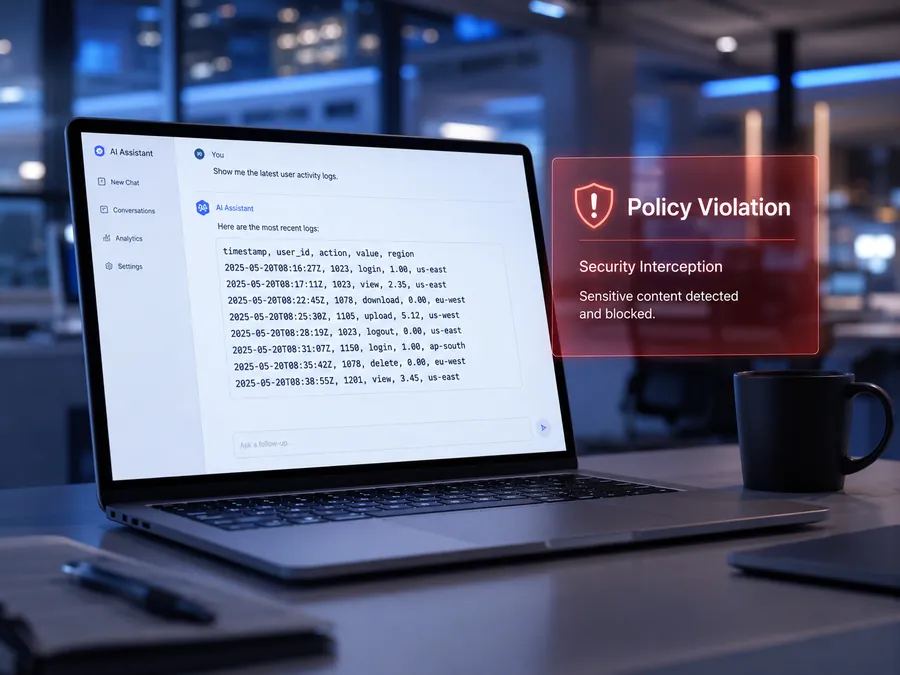
A developer pastes 10,000 rows from your NLP corpus into ChatGPT to debug a preprocessing issue. The data stays on the AI provider's servers. Your team has no idea this happened.
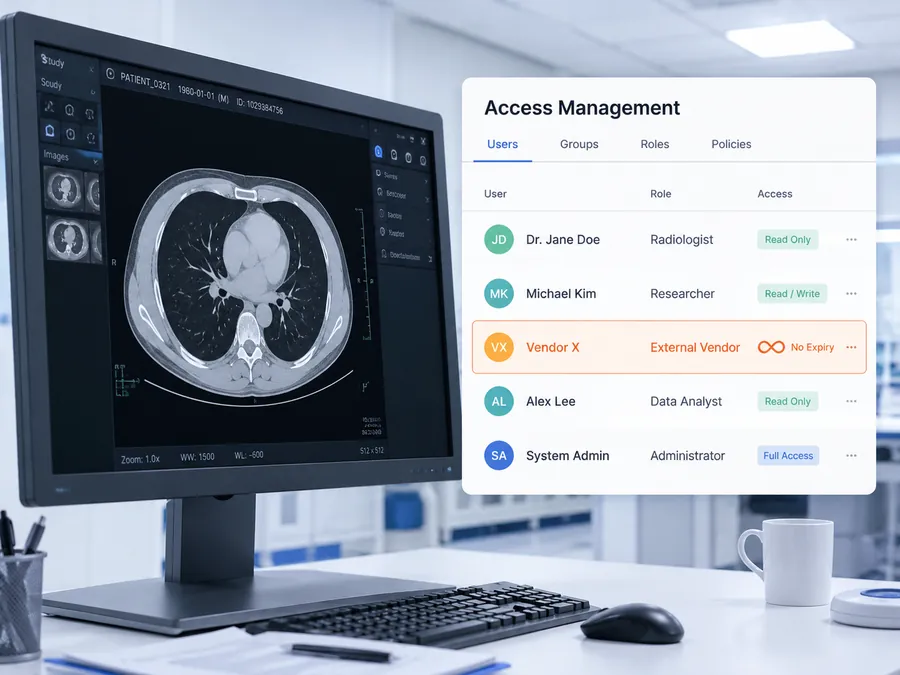
Your annotation contractor has read access to the entire medical imaging dataset — no time limit, no scope restriction, no audit trail. You can't demonstrate who saw what, or when.
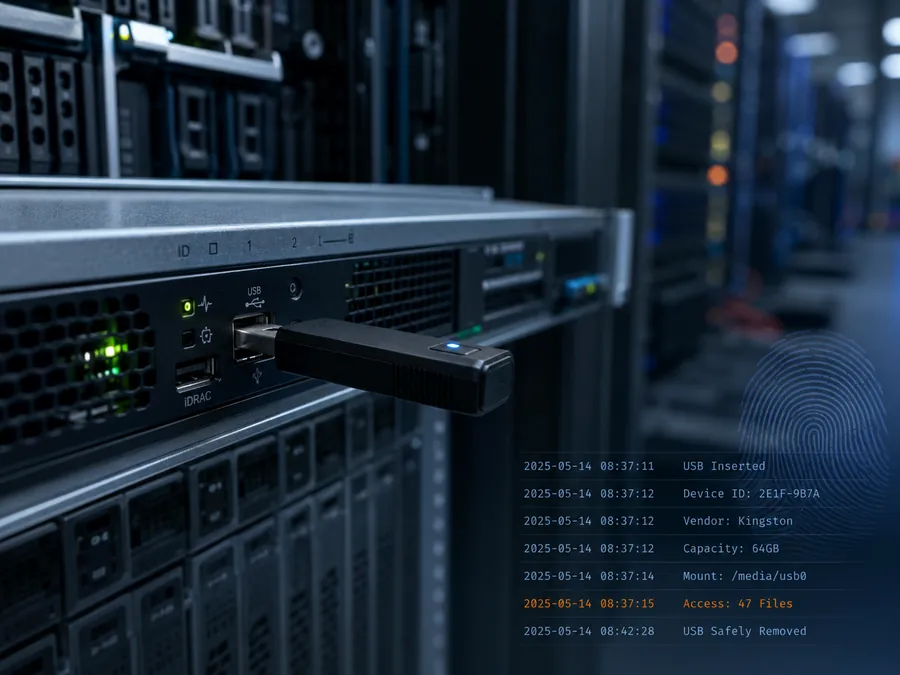
A researcher downloads your RLHF fine-tuning dataset the day before their last day. Your on-prem GPU server never connected to cloud DLP. The dataset becomes a competitor's head start.
Behavioral data used as training features contains EU user records. Sending it to a compute vendor without scrubbing is a GDPR violation — one that your DLP tool never flagged as sensitive.
File-level encryption applies to dataset directories without modifying training scripts. Python, PyTorch, and Jupyter read transparently — copy the file anywhere outside, and it opens to unreadable ciphertext.
Policies tie dataset access to specific users, machines, time windows, and executable processes. python.exe can read train/, but file managers and email clients cannot. Violations are blocked in real time — no after-the-fact alerting.
USB ports, email, cloud uploads, clipboard paste into browser AI tools, IM file transfers — AnySecura enforces policies across all exfiltration channels simultaneously. Your training data can run in your pipeline. It cannot leave it.
Invisible, cryptographically unique watermarks are embedded into dataset files at access time. If fragments of your training corpus surface externally, forensic analysis extracts the watermark and traces it back to the exact user, machine, and timestamp.
| Traditional DLP | Cloud-Only AI Security | AnySecura | |
|---|---|---|---|
| Detects clipboard paste into browser AI tools (ChatGPT, Gemini) | ✗ | ✓ | ✓ |
| Covers local dataset files on workstation or NAS | ✓ | ✗ | ✓ |
| Works in air-gapped or on-premises environments | ⚠ Limited | ✗ | ✓ |
| File-level encryption (stolen file = unreadable file) | ✗ | ✗ | ✓ |
| Process-aware access control (which exe can read which path) | ✗ | ✗ | ✓ |
| Forensic watermarking to trace dataset leak to source | ✗ | ✗ | ✓ |
Comparison based on published capabilities of leading DLP and cloud AI security platforms as of 2025.
An NLP engineer at a fintech company was testing a tokenizer on production data. To speed up troubleshooting, they pasted rows of customer transaction descriptions — with names intact — into ChatGPT 340 times over three weeks. Without clipboard monitoring, 2.8M unique customer utterances had left the perimeter before anyone noticed a policy gap existed.
With AnySecura: Clipboard-level monitoring for browser AI tools blocks the first paste and logs the attempt. The engineer is alerted to a policy violation. The CISO has an immediate audit record. The regulatory inquiry never happens.
A healthtech startup outsourced annotation of 180,000 CT scan training images to a third-party labeling vendor. Without access policies in place, the contractor had unrestricted read access to the full dataset — no expiry date, no scope restriction. A HIPAA audit exposed the gap: the company couldn't demonstrate who accessed PHI-adjacent training data, or for how long.
With AnySecura: Vendor access policies define exactly which directories the contractor can access, on which machines, for how long. The policy auto-expires on the project end date. Every access event is logged. The HIPAA audit becomes a two-hour conversation, not a six-week investigation.
A senior ML researcher gave two weeks' notice, then spent their final week downloading fine-tuning datasets and RLHF preference data to a personal NAS drive via USB. Standard cloud DLP tools never detected the transfer — the data lived on on-premises GPU servers. It's the coverage gap most DLP deployments leave open.
With AnySecura: Endpoint-level USB controls block the download from on-prem servers without requiring cloud connectivity. Forensic watermarks embedded at access time allow the leaked dataset to be traced back to that specific user's final download session — producing detailed forensic evidence that may support legal proceedings or internal investigation.
python.exe and jupyter.exe can read a training directory while file managers, email clients, and USB utilities are blocked from the same path. This runs at the file-system driver level with no changes to training scripts or ML configurations required.