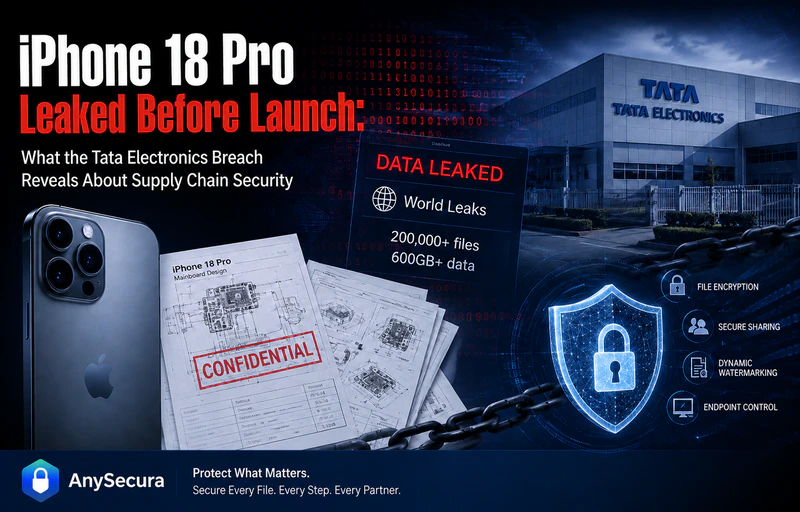
Apple's next-generation flagship, the iPhone 18 Pro, isn't expected to launch until September. Yet long before the official announcement, details including motherboard designs, camera module information, battery components, and supplier bidding documents reportedly surfaced on the dark web.
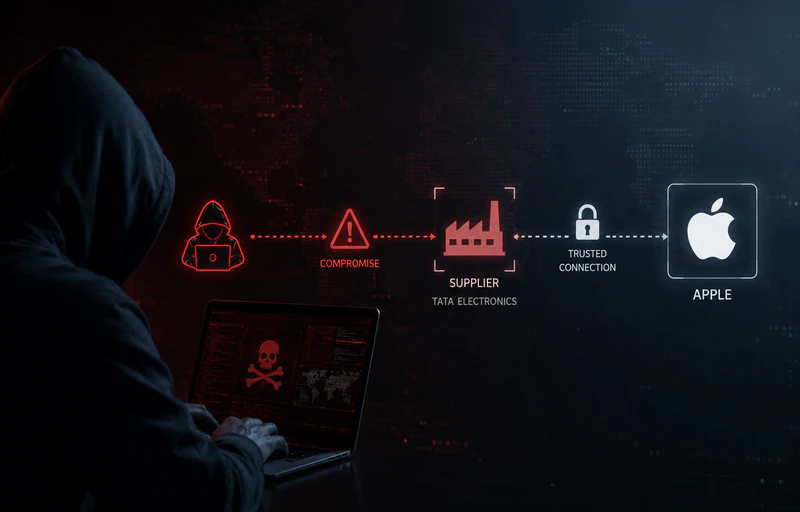
This wasn't a direct attack on Apple's infrastructure. Attackers allegedly compromised Tata Electronics, one of Apple's major manufacturing partners in India. The incident highlights a growing reality for modern enterprises: your most valuable intellectual property can be exposed even when your own network remains secure.
What Happened?
The ransomware group World Leaks claimed responsibility for compromising Tata Electronics in mid-June.
Tata Electronics, part of India's Tata Group, manufactures roughly one-third of Apple's iPhone production in India and is also an official supplier for Tesla.
The attackers published more than 200,000 files, totaling over 600GB of internal data. The exposed materials broadly fell into two categories:
- Product-related confidential information, including engineering documentation associated with the iPhone 18 Pro, supplier bidding information, and engineering drawings linked to Tesla's "Project Highland", some of which were explicitly marked as Confidential.
- Operational corporate data, including employee identity documents, certificates and cryptographic keys, factory operational records, and internal audit documentation.
Both Apple and Tata Electronics are reportedly investigating the incident.
🔗Sources: Cybernews | Al Jazeera | Reuters
Why Target a Supplier Instead of Apple?
The attack itself illustrates a strategy that has become increasingly common. Attackers targeted a trusted supplier that handled similarly sensitive information, bypassing Apple's highly mature security infrastructure.
Compromising a supplier can provide access to many of the same confidential assets—for significantly less effort.
Tata Electronics is also not an isolated case.
Over the past year, several businesses within the Tata Group have been linked to cyber incidents involving third-party operations, including IT outsourcing services supporting UK retailers and automotive manufacturing divisions. Together, they show how complex enterprise ecosystems expand the attack surface.
Global manufacturers shifting production to emerging hubs makes this worse. During rapid expansion, capacity and delivery naturally take priority over security—which takes far longer to mature—leaving newly established supply chains as attractive targets before controls catch up.
Key Lessons from the Tata Electronics Supply Chain Breach
Collaboration Shouldn't Mean Losing Control of Sensitive Files
When manufacturers share design files and bills of materials with suppliers for production coordination, many companies stop at access permissions—deciding who can log in—without ever protecting the file itself. Once a file is downloaded, copied, or forwarded outside that boundary, the originating company has effectively lost control of it.
This breach also exposed employee ID scans and cryptographic certificates alongside engineering documents—a reminder that once a file leaves a controlled environment, everything associated with it can leave as well.
Modern Ransomware Is No Longer Just About Encryption
Groups like World Leaks no longer rely solely on encrypting systems to force a payout—they steal sensitive data and threaten to publish it.
Backups and disaster recovery remain important, but they cannot prevent confidential information from being exposed once attackers have already obtained the files.
If a sensitive document is copied, transferred, or taken outside your organization, does it remain protected?

AnySecura — Keep Sensitive Files Under Control, Wherever They Travel
Encryption, controlled sharing, dynamic watermarking, and endpoint controls — AnySecura protects your files across their entire lifecycle.
The File Has Become the New Security Boundary
The ultimate security boundary is the file itself.
Document security has to follow the file—not just the network. A Data Loss Prevention (DLP) approach lets organizations maintain control over sensitive files throughout their lifecycle, even after documents are shared beyond the corporate network. This is the model AnySecura is built on.
Transparent Encryption: Files Stay Protected Wherever They Go
An engineer pulls up a component schematic, edits a BOM, or checks in source code — for authorized users on approved endpoints, everything works exactly as it always has, with no extra steps or friction.
Copy one of those files to a USB drive, send it to a personal device, or open it outside an approved environment, and it stays encrypted and unreadable — whoever ends up with the file, authorized or not, can't actually open it. That one layer of protection significantly reduces the risk of data exposure, even after a file has already left the building.
Secure External Sharing: Maintain Control After Delivery
A supplier needs the latest revision of a design file to move production forward. The instinct is to attach it to an email and send it off — but from that point on, there's no way to know who else sees it, how long it stays accessible, or whether it gets forwarded further down the chain.
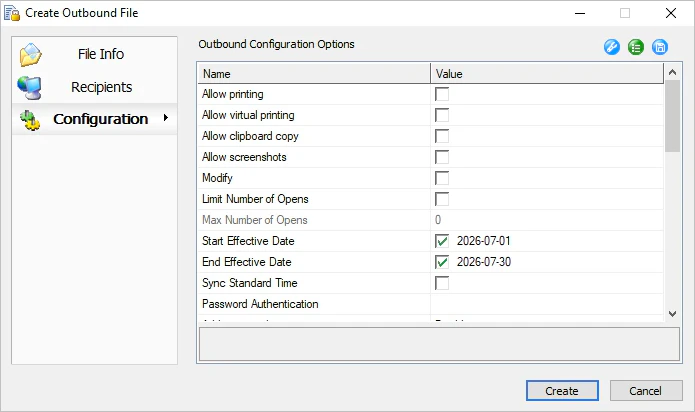
Administrators can send files as a controlled package—defining who can open it, when access expires, whether editing is permitted, how many times it can be viewed, and whether a dynamic watermark applies. The file still gets where it needs to go, but the organization keeps a say in what happens after it leaves.
Dynamic Watermarking: Make Every Leak Traceable
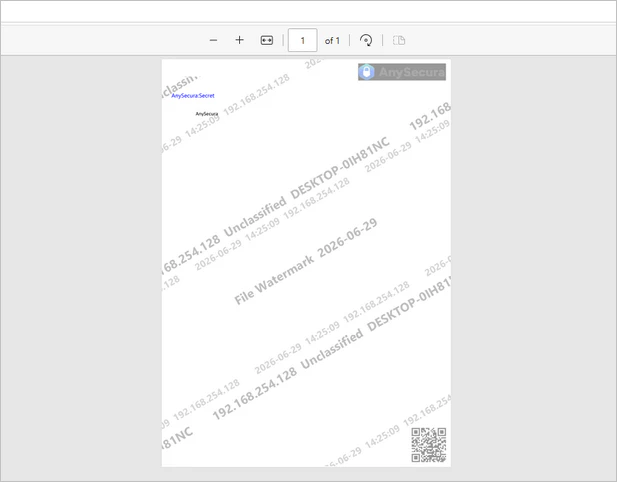
Encryption protects files before access—but what happens after an authorized user opens them? Screenshots, smartphone photos, and printed copies remain common causes of data leakage.
Security teams can apply document watermarks, print watermarks, and screen watermarks, dynamically embedding user identity, device information, timestamps, and other traceable information into displayed and printed content.
If confidential materials are leaked, organizations can quickly identify where they originated, improving accountability while discouraging intentional misuse.
Endpoint Control: Stopping Leaks at the Source
The incident also reportedly involved operational data such as certificates, audit records, and internal documentation.
These files can just as easily leave an organization through everyday endpoint activities—including USB storage devices, email, cloud storage, or messaging applications.
Policy-based endpoint controls help reduce these risks, allowing organizations to:
- Control USB and removable storage usage.
- Restrict unauthorized file transfers.
- Prevent copying and pasting within designated applications.
- Block sensitive files from being shared through unauthorized channels.
Endpoint controls significantly reduce the chances that confidential information quietly leaves the business.
The Real Meaning of Supply Chain Security
Product development today rarely happens inside a single company's walls anymore — it runs on cross-team, cross-organization, cross-supply-chain collaboration by default. Files need to move; security just can't move with less control attached. For manufacturing, high tech, automotive electronics, semiconductors, and game development alike, what actually needs protecting isn't just the network perimeter — it's every core file, from the moment it's created to the moment it's archived.
Supply chain security was never about betting on a "more trustworthy" supplier. It's about making sure a sensitive file stays visible and governable no matter which link in the chain it passes through. Extending protection to the full lifecycle of the file itself is what lets companies keep working openly with partners without losing control of what matters.
If your organization collaborates with external suppliers, AnySecura can help you keep sensitive files secure and under control.