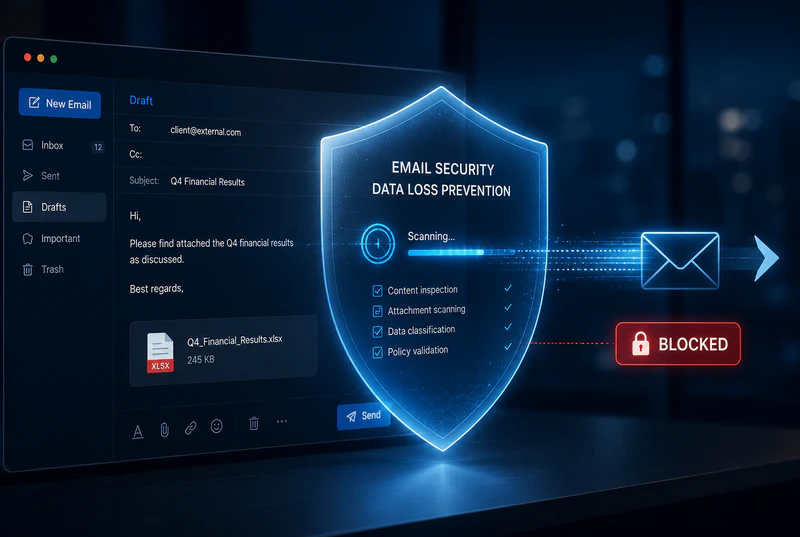
Email remains one of the most widely used tools for business communication and collaboration. Every day, employees use email to share documents, customer information, financial data, source code, and other business-critical information.
But the convenience of email also creates a significant data leakage and email security risk.
Where Traditional Email Security Falls Short
1. Multiple Email Channels Create Security Blind Spots
Employees can send files through desktop email clients, webmail services, and even personal email accounts.
Traditional email security controls often have limited coverage, making it difficult for organisations to enforce consistent policies across every channel.
Employees may also use personal email accounts to bypass corporate security controls and send confidential business information externally. Without effective monitoring, these incidents can go unnoticed until it is too late.
2. Without Content Visibility, Investigation Becomes Difficult
Many traditional email controls focus primarily on who sent an email and where it was sent, rather than what the email actually contains.
Confidential information, customer data, financial records, intellectual property, and development materials can be hidden inside email bodies and attachments, making them difficult to identify automatically.
Whether the incident is caused by an accidental mistake or deliberate data exfiltration, a lack of detailed activity records and content evidence makes it difficult to determine who was responsible and reconstruct what happened.
AnySecura Email Security: Prevent Data Leakage Before It Happens and Audit It Afterwards
Effective email security cannot rely solely on employee awareness. Organisations need technology that can enforce consistent policies and provide visibility throughout the entire data lifecycle.
AnySecura provides a complete email data loss prevention (DLP) approach built around three stages:
Prevent before sending. Block risky actions in real time. Audit and trace activity afterwards.
This helps organisations reduce the risk of both intentional data leakage and accidental email exposure while maintaining a complete audit trail for investigation and compliance.
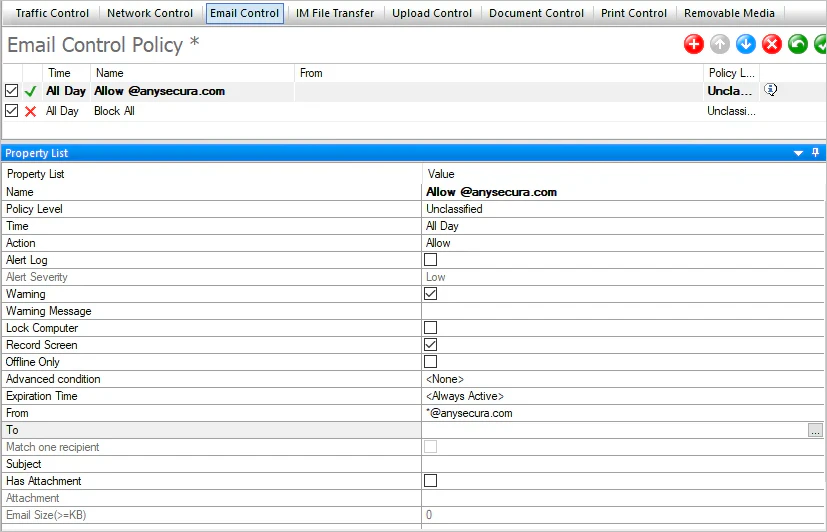
1. Control Email Sending and Block Unauthorised Messages
The first step in securing email data is controlling who can send information, where it can be sent, and under what conditions.
AnySecura allows organisations to create email security policies based on key attributes such as:
- Sender
- Recipient
- Email subject
- Attachment name
- File size
- Other predefined conditions
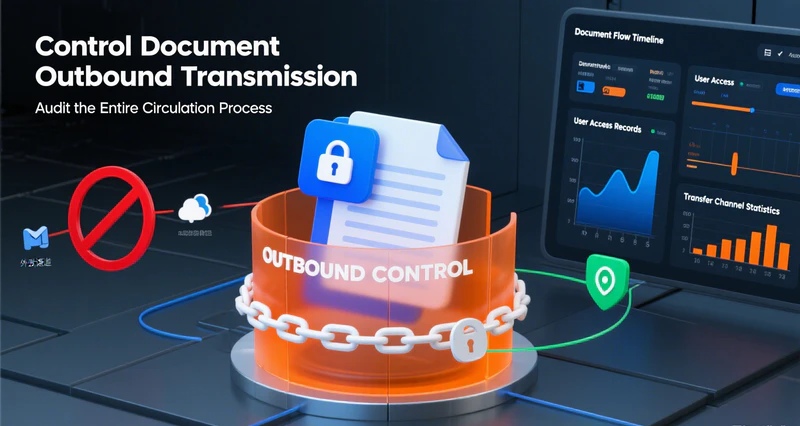
When a message violates a security policy, AnySecura can automatically block the email from being sent.
Organisations can also restrict employees to using approved corporate email accounts for business communication and prevent work-related files from being sent through personal email accounts.
For employees handling highly confidential information, organisations can enable a mandatory CC policy, requiring outgoing emails to be copied to the employee's manager or designated supervisor.
This provides an additional layer of oversight and helps reduce the risk of unauthorised data disclosure.
2. Detect Sensitive Content and Stop Data Leakage
Controlling email behaviour alone is not enough. Content inspection is a critical part of effective email DLP.
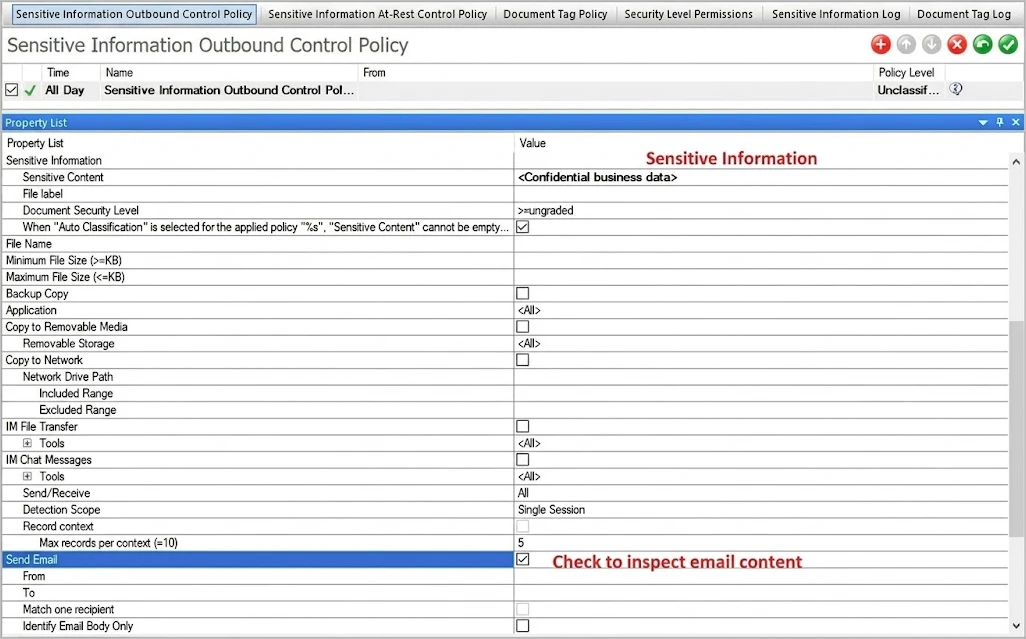
Using sensitive content identification technology, AnySecura can automatically classify and assign sensitivity levels to business documents and inspect both email bodies and attachments.
If an email contains predefined sensitive information, such as:
- Confidential business data
- Intellectual property
- Customer information
- Financial records
- Core technical information
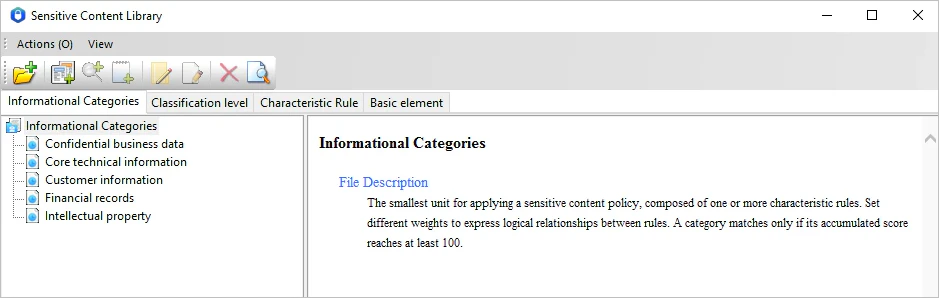
AnySecura can identify the risk and block the email from being sent according to the organisation's security policies.
This helps prevent sensitive data from being exposed through accidental mistakes, policy violations, or intentional insider actions.
3. Capture Screenshots to Improve Email Activity Visibility
Email audit logs can show what was sent, but they may not always provide enough context about what the employee was doing at the time.
To strengthen email monitoring and forensic investigation, AnySecura can work with its screen monitoring capabilities to trigger an automatic screenshot when an employee sends an email through a supported desktop email client.
This creates an additional visual record of the operation at the time of sending.
By combining activity logs with screen evidence, security and compliance teams can gain a clearer picture of email-related activities and improve the accuracy of post-incident investigations.

Email Control — Prevent Data Leakage Through Email
Control email sending, detect sensitive content, block unauthorised data transfers, and maintain a complete audit trail for secure and compliant email communication.
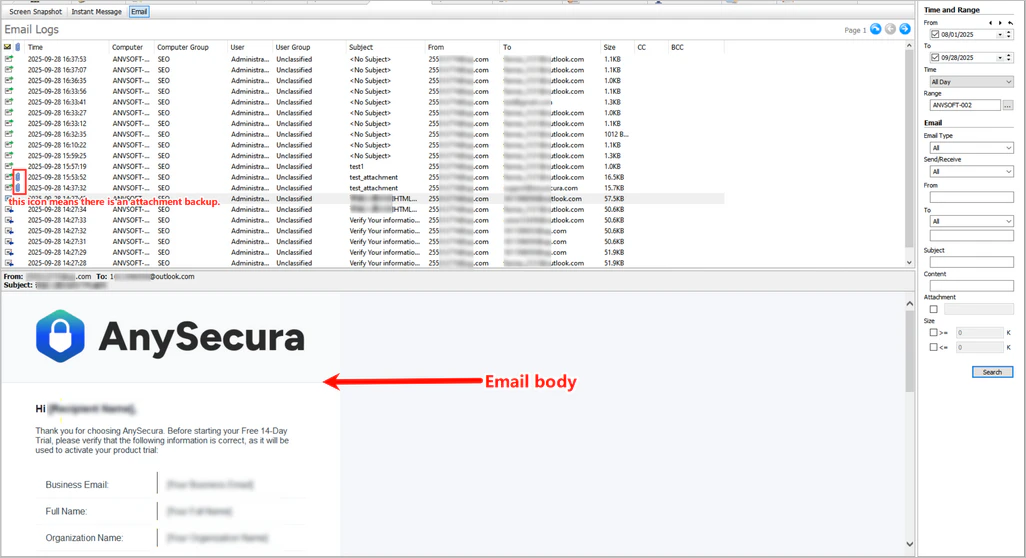
4. Keep Detailed Records for Email Auditing and Investigation
Preventing data leakage is only part of an effective email security strategy. Organisations also need to know what happened, who was involved, and where the information went.
AnySecura can record key email activity, including:
- Sender
- Recipient
- Subject
- Email body
- Attachments
These records provide a detailed email audit trail for security investigations and compliance requirements.
Administrators can quickly search and review email activity by department, time period, attachment, recipient, and other criteria.
This makes it easier to identify potentially risky behaviours, such as:
- Repeated emails sent to unfamiliar external addresses
- Large numbers of files sent externally
- Unusual email activity
- Attempts to send sensitive information outside the organisation
When a potential incident occurs, administrators can retrieve the relevant records and evidence to support risk investigation, accountability, and incident review.
A More Complete Approach to Email Data Loss Prevention
With email sending controls, sensitive content detection, activity monitoring, and audit trails, AnySecura helps organisations establish a more comprehensive approach to email security and data loss prevention.
Employees can continue using email normally for day-to-day communication, while security teams gain greater visibility and control over sensitive information leaving the organisation.
Instead of simply asking whether an email was sent, organisations can answer the questions that matter most:
Who sent it?
Who received it?
What was sent?
And what happened during the sending process?
With AnySecura, organisations can strengthen email data protection, prevent data leakage, and improve insider risk management without unnecessarily disrupting everyday business operations.