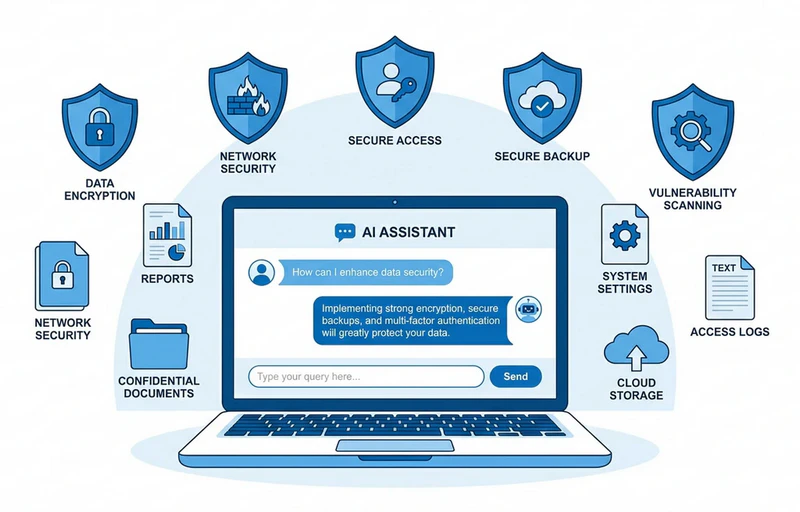
In 2026, the conversation has shifted. For most organizations, AI in the workplace is a given — the real question now is how to govern it with the right AI governance policy in place. Drafting proposals, building reports, crunching data: AI handles all of it faster than any team could. But every file that gets uploaded to an AI platform is a file that leaves your perimeter, and with it goes control over your most sensitive business information. Data leaks and compliance violations are no longer hypothetical — they're an upload button away.
So how do you let AI do its job without putting your data at risk?
AnySecura's AI Security Solution was built for exactly this moment — giving organizations precise control over how employees interact with today's leading AI tools. Staff can keep working the way they need to. Confidential files stay where they belong.
The framework below offers five distinct lines of defense, running from the most restrictive to the most flexible. Mix and match them to fit your organization's risk profile, and close every gap along the way.
Defense #1: Allowlists & Blocklists — Define Exactly Which AI Tools Are Permitted
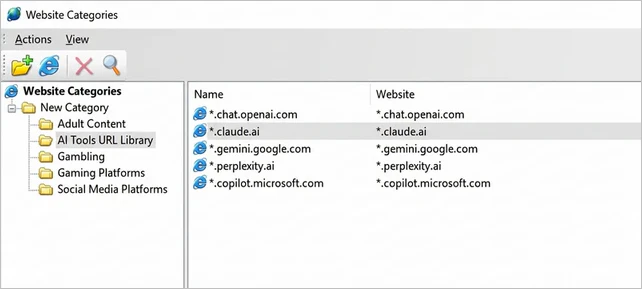
AnySecura's Web Access Control, backed by a continuously refreshed AI domain library, lets administrators block all unauthorized AI websites and enforce Shadow AI controls across the organization — shutting off unsanctioned uploads before they can happen. Where access is legitimately needed, specific platforms can be individually whitelisted, keeping usage controlled and policy-compliant.
Desktop AI clients fall under the same governance. AnySecura's Application Control module can prevent unauthorized AI applications from launching entirely. Paired with IT Asset Management, the system periodically scans installed software across all endpoints, and can automatically push network-wide policies to disable or force-uninstall any non-compliant tools it finds.
This is the most cost-effective and clear-cut line of defense — ideal for organizations with the strictest security requirements that need hard boundaries around which AI tools are even allowed on the network.
Defense #2: Precision Control — Text Queries Yes, File Uploads No
Not every situation calls for a blanket ban. AnySecura's Document Control capability lets organizations block file uploads to AI platforms — web-based and desktop alike — while leaving employees free to type text queries for research, drafting, summarization, and content generation.
The upload action is blocked. The conversation isn't.
Best for organizations that want employees to get value from AI's text capabilities, while ensuring no corporate file ever leaves the endpoint.
Defense #3: Real-Time Interception— Catch Sensitive Files the Moment They Move
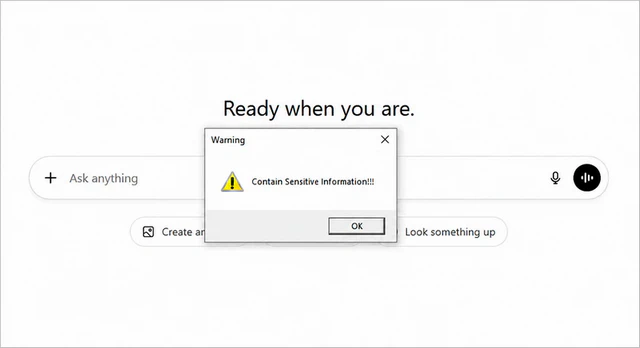
AnySecura's Sensitive Content Inspection module watches file transfers as they happen. The moment an employee attempts to upload a file to any AI application, the system automatically scans its contents using data loss prevention (DLP) policy rules. Files that clear the check transfer normally. Files that trigger a match are blocked on the spot — and depending on policy configuration, the workstation can be locked and the operation forcibly terminated.
It's not about blocking everything. It's about making sure the things that matter never get through. Stopping a leak at the point of transfer is worth far more than investigating it after the fact.
Best for companies that want AI to remain fully usable for everyday work, while ensuring core sensitive data is never one upload away from exposure.
Defense #4: Transparent Encryption — Even If It Uploads, It's Unreadable
AnySecura's Transparent Encryption keeps documents in ciphertext at all times — on the endpoint, in transit, and everywhere in between. When an encrypted file is uploaded to an AI platform, what arrives on the other end is ciphertext the AI cannot parse, interpret, or use.
AnySecura also supports intelligent encryption: if the system detects that a file containing sensitive content is being uploaded through an AI application, it automatically encrypts the document before the transfer completes — so whatever the AI receives is locked by default.
Without the decryption key, the file is worthless to anyone who gets it.
Best for organizations that need deep protection for high-value data assets, while still allowing employees to upload general documents to AI tools without friction.
Defense #5: Compliance Audit Trail — Every Action Logged, Every File Traced
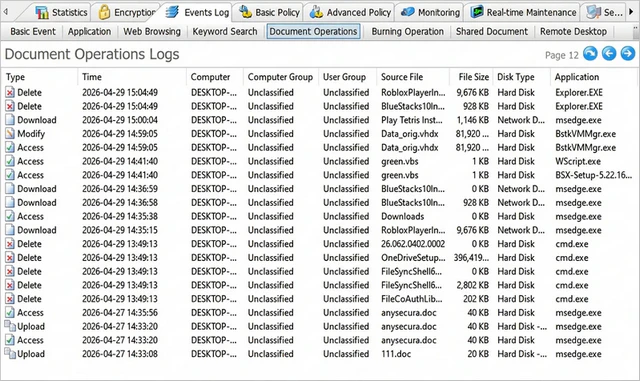
AnySecura logs every file upload made through an AI tool in full detail, automatically backs up the original files, and captures a screenshot of the workstation at the exact moment of upload — building a clear, reviewable record for compliance reviews and internal investigations.
For organizations that don't need to log everything, selective auditing is available: routine files pass without a record, while uploads of sensitive files trigger automatic logging and screenshot capture, producing direct documentary evidence whenever it's needed.
When something goes wrong, "we have no record of that" is the worst possible answer.
Best for compliance-driven organizations that need a defensible, auditable history of how sensitive data was accessed and handled.

AnySecura — Harness AI Productivity Without the Data Breach Risk
Control which AI tools your teams use, block sensitive file uploads in real time, and maintain a full compliance audit trail — all without slowing down how your people work.
From allowlists and blocklists, through Document Control and real-time Sensitive Content Inspection, to Transparent Encryption and full behavior auditing — AnySecura's five-layer framework gives organizations the flexibility to build a robust AI data security and governance posture that fits how they actually work. The outcome: AI delivers on its productivity promise, and data security is never the price you pay for it. Ready to formalize your rules? Download our GenAI acceptable use policy template to get started.