Employee departures are a normal part of business, but they can also create significant data security risks. Sensitive assets such as engineering drawings, source code, R&D documents, and customer information can cause serious financial and competitive damage if they are copied or transferred without authorization.
A major trade secret misappropriation case involving advanced manufacturing technology highlights the scale of this risk. According to case information, an employee downloaded and copied large volumes of proprietary technical materials before leaving the company. The reported activity included 162 server file downloads, more than 70,000 file-copying operations through network shares, and 37,340 technical drawings, digital models, and core technical documents. The case ultimately resulted in substantial financial damages.
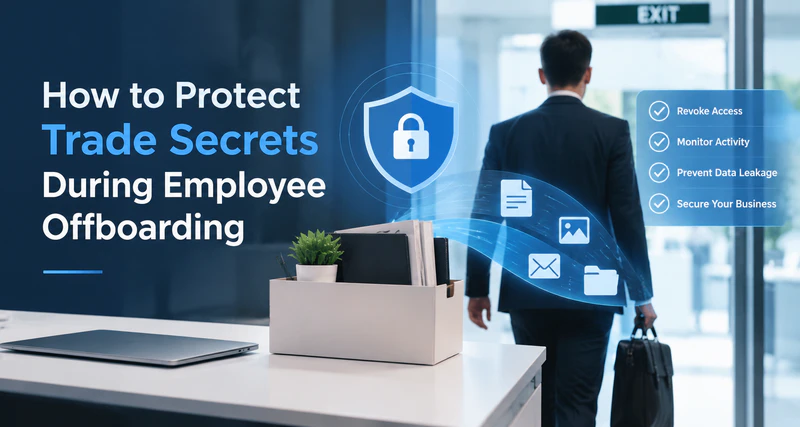
The case highlights an important lesson: data security cannot begin only after an employee leaves. Organizations must also address the risk of employees misusing legitimate access privileges to take sensitive data during the offboarding process.
How can businesses identify these risks and protect their trade secrets during employee offboarding?
1. Why Employee Offboarding Creates Data Security Risks
1.1 Legitimate Access Can Become an Insider Threat
Employees often need access to business-critical files to perform their daily responsibilities, including product development, engineering, manufacturing, and operations.
However, during the employee offboarding process, existing access privileges can become a security concern if permissions are not reviewed and file activities are not properly monitored.
Employees who have submitted their resignation may still retain access to sensitive documents until their last working day. Without effective monitoring, unusual downloads, bulk file copying, or unauthorized transfers may go unnoticed.
1.2 Sensitive Data Can Leave Through Multiple Channels
Data theft does not always involve sophisticated cyberattacks. Common workplace tools can also become channels for unauthorized data transfers.
These include USB drives, email, instant messaging applications, personal cloud storage, and web uploads.
Confidentiality agreements and employee policies are important, but they cannot independently prevent every unauthorized file transfer. Businesses also need technical controls to manage how sensitive documents are accessed, copied, and shared.
1.3 Limited Activity Records Make Investigations More Difficult
When a potential data leak occurs, security teams need to determine which files were accessed or transferred, when the activity occurred, and how the data may have left the organization.
Without reliable file activity records and appropriate security alerts, it can be difficult to reconstruct what happened and identify the necessary response measures.
Combining data protection, activity monitoring, and file auditing helps organizations reduce data loss risks and investigate potential insider security incidents more effectively.
2. How AnySecura Helps Prevent Data Theft During Employee Offboarding
To reduce employee offboarding risks, businesses need a combination of file protection, data transfer controls, document backup, and activity auditing.
AnySecura provides endpoint data security capabilities that help organizations protect sensitive documents, control data transfers, and monitor file activities.
2.1 Transparent Encryption: Protect Sensitive Business Files
For manufacturing and R&D organizations, engineering drawings, product designs, source code, and technical documents are often among their most valuable digital assets.
If these files are stored without encryption, copying them to another location may expose them to unauthorized access, even when network access is controlled.
AnySecura supports transparent encryption for designated documents. Authorized users can continue working with protected files according to their permissions, while encryption operates in the background with minimal disruption to normal workflows.

If encrypted files are copied outside the organization without authorization, encryption can help reduce the risk of unauthorized access and use. Businesses can also apply document security levels and visible or invisible watermarks according to configured policies.
By combining transparent encryption with access controls, organizations can maintain protection for sensitive documents beyond their original storage locations.
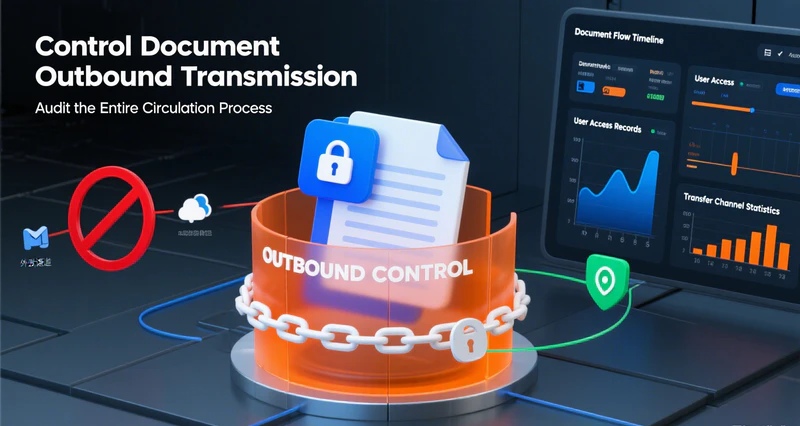
2.2 Data Transfer Controls: Restrict Unauthorized File Transfers
File encryption alone cannot replace the need to control how sensitive data leaves the organization. Businesses also need to manage the channels through which confidential documents may be transferred.
AnySecura supports data transfer controls across multiple endpoint channels, including removable storage devices, email, instant messaging applications, and web access.
When a file transfer triggers a configured security policy, the system can take actions such as blocking the transfer, displaying a warning, or recording the activity.
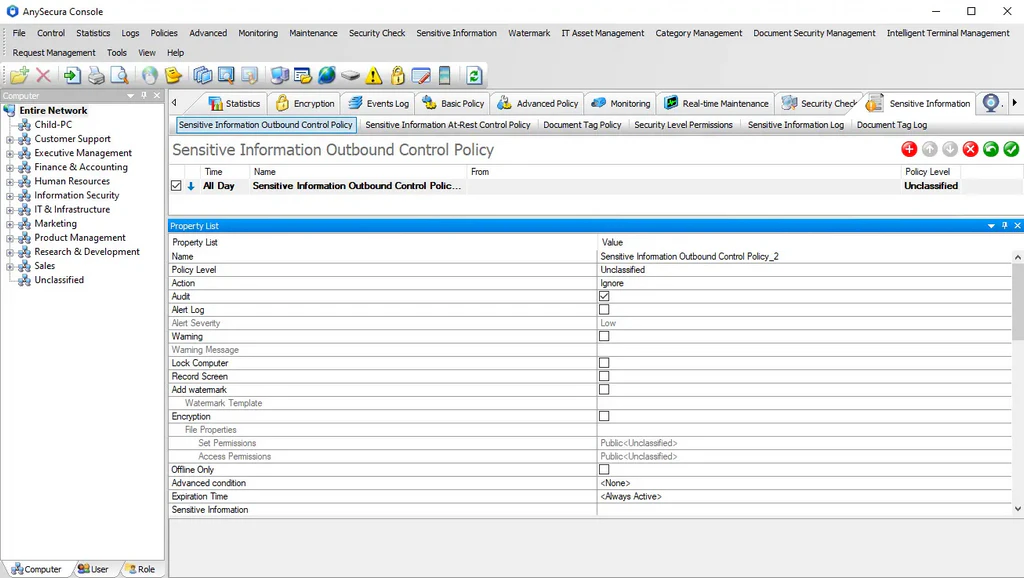
Depending on the deployed modules and policies, organizations can also capture relevant screen activity or back up files to support investigation and response.
For example, businesses can restrict unauthorized removable storage devices, control the transfer of designated sensitive documents, and generate alerts for data transfer activities that meet predefined risk criteria.
These controls help reduce the risk of unauthorized data transfers while improving visibility into potentially suspicious activities.
2.3 Document Backup: Reduce the Risk of Critical File Loss
During employee offboarding, businesses must consider not only data theft but also the possibility of important files being deleted, modified, or overwritten.
For R&D and engineering teams, losing critical documents can disrupt projects, delay handovers, and increase recovery costs.
AnySecura's Cloud Document Backup feature can automatically back up designated endpoint documents according to configured policies. If files are deleted or modified, organizations can retrieve available backups and restore the relevant documents when needed.

Combining document backup with other data security measures helps protect important business files and supports business continuity during employee transitions.
Backup primarily supports data recovery. It should complement, rather than replace, access controls, data transfer restrictions, and file activity auditing.
2.4 File Activity Auditing: Improve Visibility and Support Investigations
Without visibility into how files are accessed, copied, and transferred, organizations may struggle to investigate potential data breaches.
AnySecura can record file activities such as creation, access, copying, renaming, deletion, uploading, and downloading. Depending on the deployed modules and configuration, businesses can also audit relevant email and instant messaging activities and generate alerts for high-risk behaviors, such as bulk downloads or frequent data transfers.
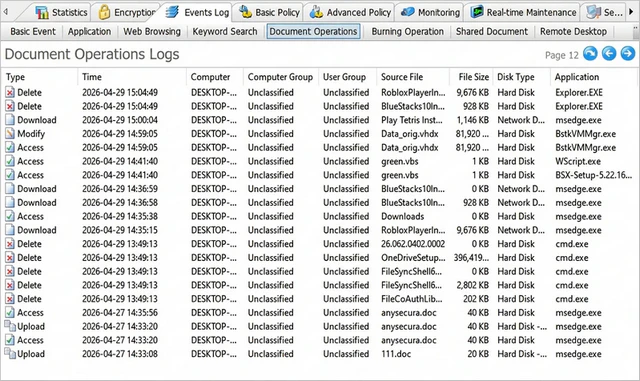
These records help security teams understand how sensitive files are being used and transferred, identify unusual activities that require further investigation, and establish a clearer picture of potential data loss incidents.
File activity auditing helps organizations identify suspicious behavior and provides valuable records for incident response and investigation.
However, activity records should be evaluated alongside job responsibilities, business context, and other evidence. A single file operation should not automatically be treated as proof of malicious intent.
2.5 Offboarding Policy Roles: Simplify Security Policy Management
Employee offboarding often involves several tasks, including access reviews, endpoint controls, document protection, and activity auditing.
Configuring these policies individually for every departing employee can increase administrative workloads and create opportunities for human error.
AnySecura supports predefined roles for managing endpoint security policies for departing employees. Administrators can configure relevant control rules and auditing policies in advance, then assign employees to the appropriate role or policy group when they enter the offboarding process.
For example, organizations can adjust file access permissions, data transfer restrictions, and auditing policies based on job responsibilities and document sensitivity, while progressively removing access that is no longer required.
This approach helps standardize offboarding security measures, reduce repetitive configuration tasks, and minimize gaps in policy enforcement.

AnySecura — Protect Trade Secrets During Employee Offboarding
Combine transparent encryption, data transfer controls, document backup, and file activity auditing to reduce insider data risks when employees leave.
3. Best Practices for a More Secure Employee Offboarding Process
Technology is an important part of insider threat prevention, but effective employee offboarding security also requires clear procedures and responsibilities.
Businesses can strengthen their processes by following these practices:
- Review access permissions early: Reassess system and file access when an employee resigns, taking job responsibilities and handover requirements into account.
- Monitor unusual file activity: Investigate potentially suspicious behavior, such as large volumes of downloads, bulk copying, or unauthorized data transfers.
- Apply data protection based on sensitivity: Use appropriate encryption, access controls, and transfer restrictions for different categories of business data.
- Recover company devices and disable unnecessary access: Follow established procedures for collecting company equipment and managing accounts and credentials.
- Retain necessary audit records: Maintain relevant activity logs and security incident records in accordance with company policies and applicable legal requirements.
Combining these practices with endpoint data loss prevention (DLP) tools helps organizations reduce insider data risks while maintaining business continuity during employee transitions.
Conclusion
Employee turnover is inevitable, but losing control of trade secrets and other sensitive business data should not be.
Organizations need to combine transparent encryption, data transfer controls, document backup, file activity auditing, and access management to reduce the risk of unauthorized data copying, transfer, or destruction.
AnySecura's endpoint data security capabilities help businesses protect sensitive documents, manage data transfers, and monitor file activities, providing a more comprehensive approach to protecting trade secrets and business-critical information.
Protect Your Business-Critical Data with AnySecura
Looking to strengthen data security during employee offboarding? Discover how AnySecura can help your organization protect sensitive files, control data transfers, and reduce insider data risks.