
Whether you are a newly promoted manager or an experienced one caught between upper management's decisions and your team's emotions, feeling overwhelmed when a disgruntled employee appears is completely normal.
Mishandling disgruntled employees can negatively impact both team morale and overall efficiency. Worse, they might take actions that could pose risks to the company. This guide walks you through exactly how to handle a disgruntled employee step by step, and how to prevent similar problems from occurring in the future.

Part 1: What Is A Disgruntled Employee
A disgruntled employee is someone who consistently has negative feelings and evaluations about their work. This attitude has moved from merely expressing concerns to observable changes in behavior and performance. They may disengage, resist collaboration, break rules, or even misuse company assets.
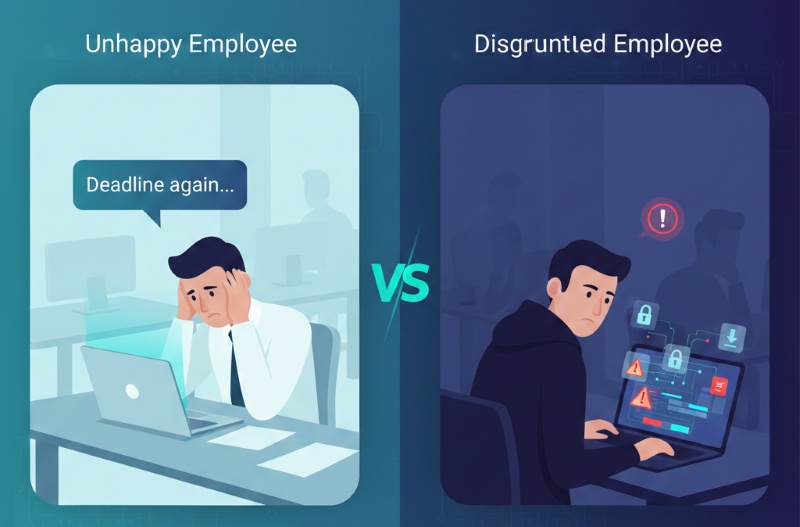
Not every employee who feels unhappy has become disgruntled - a worker who protests against a short deadline or a postponed bonus does not automatically pose a long term threat. Brief spells of frustration belong to normal office life. A disgruntled employee, by contrast, displays steady dissatisfaction that changes the person's conduct, the standard of the work or the outlook on the firm.
Common signals of a disgruntled employee, as opposed to a simply unhappy one, include:
- Frequent negative comments in meetings
- Sudden drop in task completion rate
- Missing deadlines that were previously met
- Refusing to share information with teammates
- Increased conflict with colleagues
- Ignoring company policies that were previously followed
- Accessing or downloading large volumes of company files without clear business reason
- Working unusual hours while handling sensitive documents
If two or more of these signals appear consistently over several weeks, it’s time to take proactive action.
Part 2: How to Handle A Disgruntled Employee
The suggested process to handle a disgruntled employee is to follow the sequence of "facts first, then dialogue, followed by planning, and finally, procedural escalation." Also, the earlier disciplinary and grievance issues are addressed, the less time they take and the smaller the impact on relationships.
Step 1: Collect Clear Information
Turn signals into facts. You can extract recent attendance/absence records from the past four weeks, delivery boards, rework instances, and customer/colleague complaint records. It would be better if you categorize them into three types.
- Category A can be addressed through resource or goal adjustments. Steps 2-4 will guide you through the process.
- Category B involves relationship or discipline issues and requires specific procedural steps. Refer to Step 5 for handling.
- Category C concerns safety and sensitive assets, which requires IT security involvement. If no evidence of Category C has been found, we strongly recommend taking preventive measures in advance.
After this, prepare a "conversation goal draft": what facts do you want to confirm, what explanation do you expect from them, and what commitment do you hope to achieve.
Step 2: Schedule a Private One-on-One Meeting
Schedule a private one-on-one meeting around 30–60 minutes, choose a private space or a secure meeting room. Follow the approach below:
- Align on the facts, just share the records, no conclusions.
- Explore the reasons, whether it's job role, resources, conflicts, health, family or understanding of rules.
- Confirm the next steps, check if a role change, training, support, or grievance channels are needed.
Avoid phrases like "you always" or "you never". Focus on specific events and timeframes. The key to this step is setting boundaries, managing emotions, and having a clear plan of action.
Step 3: Turn the issues into an "Action Plan" with Review Points
Create a one-page document listing 3-5 specific behaviors/results that must be achieved in the next cycle. For each, clarify: what will be done, when it will be delivered, and who will assist. Also, specify what the company can offer: for example, assigning a mentor, reducing last-minute demands, adjusting schedules, or providing mental health support channels. Set fixed review dates (e.g., two weeks or four weeks later). Replace vague terms like "attitude improvement" with measurable indicators.
Step 4: Continuous Tracking and Timely Feedback
Hold a short review once a week. Take 10–15 minutes to check off the items in the "Action Plan." For incomplete tasks, ask the employee to outline the "obstacles—solutions—deadline." For completed tasks, provide specific praise (e.g., "You delivered 3 requirements on time this week, with zero rework"). Keep a record in the same tracking document to build an evidence trail.
Step 5: Escalate to Formal Procedures if Necessary
If Category B issues we mentioned in Step 1 (for example, severe violations, ongoing resistance, bullying/harassment) arise, or the action plan you set in Step 3 fails, you should initiate formal procedures as per company policy.
If proceeding with contract termination, ensure compliance with local laws regarding regulations, incompetence, and advance notice requirements.
How to Protect Your Business from Internal Risks
While most situations can be resolved with communication, some disgruntled employees may pose real business risks. In less severe cases, they might simply reduce their work output or actively sabotage projects, while in more serious cases, they could leak sensitive information or deliberately compromise systems. Addressing the employee’s emotional needs is critical, but preventing internal risks is equally important when dealing with a disgruntled employee.
Tools like AnySecura can help you monitor and mitigate these risks effectively. AnySecura is an integrated platform for businesses that combines Data Loss Prevention (DLP), Endpoint Management, and User Activity Monitoring, aimed at reducing the risk of data leakage and internal policy violations through document encryption, tracking, and risk auditing.
What You Can Get with AnySecura?
- Usage Activity Monitoring: AnySecura records all employee computer activities—opening, copying, deleting, or transferring files—clearly showing who accessed sensitive data and what actions were taken. This helps managers detect disengagement or risky behavior early, providing evidence to address issues and maintain team stability.
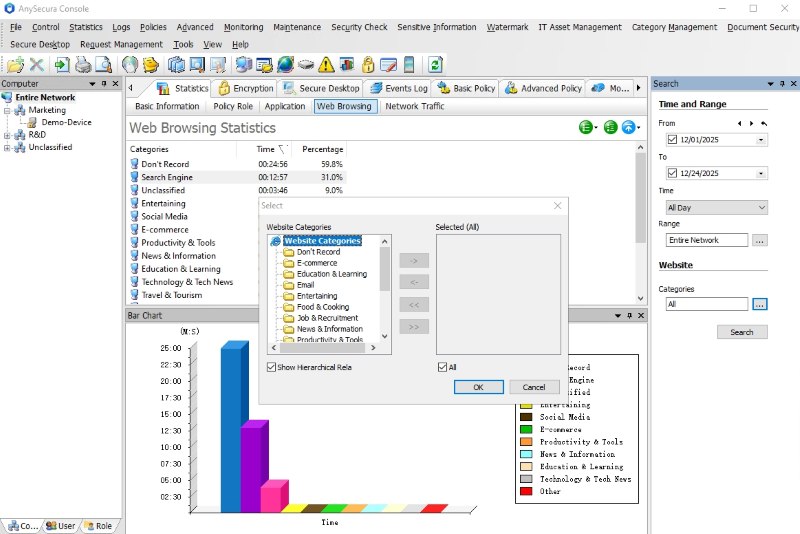
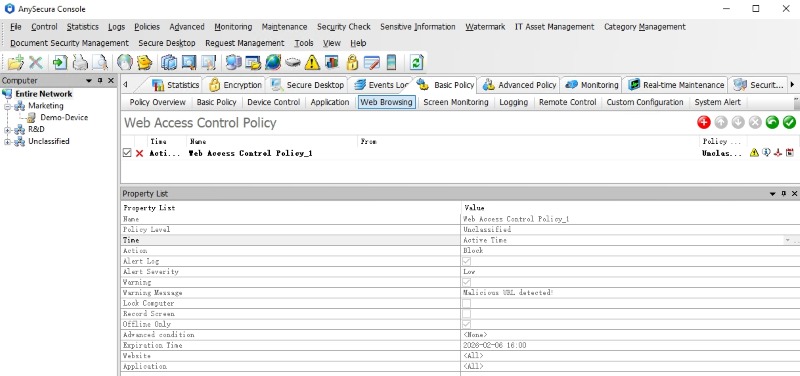
- Endpoint Control:
AnySecura controls external devices and usage permissions—disabling USB drives, restricting printing, screenshots, or file transfers—to prevent employees from copying or taking company data. By monitoring hardware and software, it helps stop malicious actions and misuse of company resources.
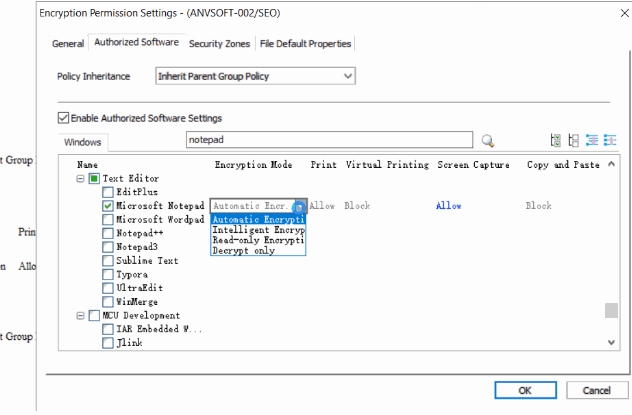
- Document Encryption: AnySecura will automatically encrypt core files. These files can be used normally within the company, but once copied externally, taken home, or sent to others, they cannot be opened or used—effectively preventing data leaks at the source.
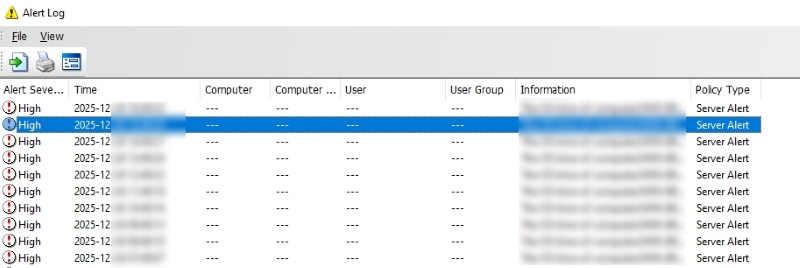
- Behavior Anomaly Alerts: AnySecura triggers real-time alerts for abnormal behaviors such as bulk copying, large-scale downloads, late-night transfers, or frequent decryption, enabling administrators to detect high-risk actions immediately and stop malicious activities in time.
- DLP (Data Loss Prevention):
AnySecura can automatically detects and controls the transmission of sensitive information. Whether it is sent via chat apps, email, cloud drives, or external links, the system automatically blocks or alerts, preventing core data from being leaked or spread without authorization.

Discover top 5 employee monitoring software in 2026. Compare pros and cons to find the perfect tool for workforce management.Learn more>>
Part 3: How to Prevent Employees from Becoming Disgruntled
Prevention is more effective than crisis handling. Here are practical steps managers can take:
- Write "Roles and Boundaries" on Paper in Employee's First Week: Complete three documents in the first week. Have them signed: Job goals (what needs to be delivered this quarter), collaboration rules (how to request changes, response timelines), and discipline/data rules (which information cannot be shared externally, which behaviors trigger audits).
- Fixed One-on-One Schedule with a Template for Discussion: It’s recommended to have 30-45 minutes one-on-one meetings every month. The agenda should be fixed with four topics: the biggest work obstacles of the month, resources/permissions needed, cooperation friction points, personal development and workload.
- Establish a "Collaboration Friction" Rapid Resolution Channel: When there is obvious friction such as public arguments or personal attacks, arrange a three-party meeting with the two involved parties and a supervisor or HR representative within 48 hours.
- Check if "Rules are Fairly Enforced" to Prevent Favoritism: Conduct a policy execution consistency check every quarter. Randomly review three common policies, such as leave, reimbursements, remote work, and overtime approval, to ensure they are applied consistently across teams. If discrepancies are found, provide written explanations and publish them.
- Make Mental Health Support a Formal Entry Point, Not Just "Concern After Issues Arise": Organizations should actively support mental health at work. Set up two entry points: an anonymous mental health support hotline or EAP if available, and reserve one minute in every team meeting to remind employees that they can contact support if feeling stressed.
- Provide Manager Training Covering "Difficult Conversations" and "Conflict Resolution": Offer training for new managers every six months, including role-playing on starting with facts, asking open-ended questions, and guiding discussions toward a clear action plan.
- Establish Formal Appeal/Mediation Pathways and Let Employees Know "How to Use Them": Clearly document in the employee handbook the procedure for submitting an appeal, including where and how to submit it, expected timelines, investigation steps, and the re-evaluation process. Review this procedure with all employees during onboarding.
FAQs about Handling A Disgruntled Employee
How do you handle an employee who refuses to cooperate?
Start by focusing on objective facts and clear expectations. Document the employee’s performance and uncooperative behavior in detail, then hold a structured one-on-one meeting to address the issue. Clearly outline the consequences of continued inaction (e.g., formal disciplinary action) and follow company policy for escalation if cooperation does not improve. Early, consistent communication is key to reducing further resistance.
How can you prevent disgruntled employees from affecting the team?
Proactively manage employee expectations, foster open communication, and create a positive work environment. Offering regular feedback, recognition, and ensuring clear roles and boundaries can reduce the risk of employees becoming disgruntled.
AnySecura can play a key role in mitigating potential threats by offering comprehensive tools for monitoring employee activities, ensuring data security, and addressing conflicts before they escalate.
Conclusion
Managers who follow the guide handle unhappy staff members in a practical way. They speak with each employee as soon as the first sign of discontent appears. They set out exact rules on how information flows between the worker and the supervisor. They select and use suitable software or procedures. Those actions stop minor irritation from turning into a major dispute.
Try AnySecura if you are concerned that you might not detect disgruntled employees in time or that they could cause internal risks or disruptions. AnySecura offers support through insights into unusual employee behavior while ensuring data protection.